The Hybrid Ad Playbook: Mixing UGC Creators with AI Generation
Pure AI ads look fake. Pure UGC ads are too slow to produce. The winning strategy is the Hybrid Model. Here is exactly how to execute it.
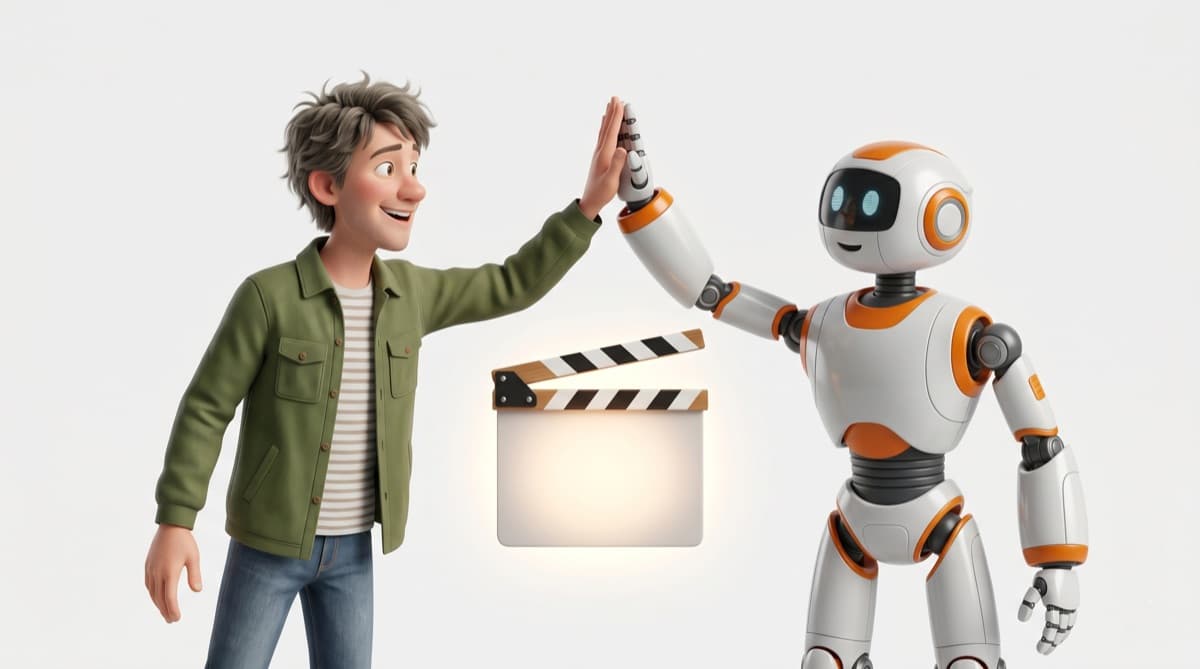
We have reached a major inflection point in digital advertising. If you attempt to run direct-response campaigns using 100% synthetic, computer-generated AI avatars, consumers scroll past immediately because the robotic visuals trigger their internal scam radar. On the other hand, if you rely entirely on human editors to manually film, slice, and stitch User-Generated Content, your output is far too slow to survive algorithmic fatigue.
The most profitable growth teams in the world have moved to the Hybrid Model. They strategically use real humans to build initial trust, and they use programmatic AI engines to generate massive algorithmic scale.
What is the hybrid creative model for performance marketing?
Direct Answer
The hybrid creative model leverages authentic, human-produced User-Generated Content (UGC) as the foundational raw material, and then applies programmatic AI to scale and iterate hooks, captions, and pacing. This approach combines human empathy and authenticity with machine-speed algorithmic testing for optimal ROAS.
A purely human-driven pipeline is a logistical nightmare. It requires coordinating with creators, shipping physical products across the country, waiting for them to film the B-roll, and managing endless edit revisions inside Premiere Pro. This introduces a crippling 14 to 21-day frictional delay for every single video variation.
Conversely, a purely AI pipeline requires zero humans and takes five minutes, but the resulting videos are devoid of soul. They yield acquisition costs that are often three times higher due to consumer ad-blindness. The AI lacks the micro-expressions, the messy bedroom backgrounds, and the subtle imperfections that actually drive social commerce conversions.
By paying a human creator exactly once for the core, authentic visual footage, and then paying an AI engine infinitely to generate endless mathematical variations of that footage, you achieve the perfect operational balance. You acquire the incredible unit economics of AI (zero cost to produce variations) while fully retaining the high conversion rates of human authenticity.
Execution
The Hybrid Architecture
Pay a real creator a flat fee to film a highly authentic, slightly unpolished product demonstration. Instruct them to film 5 different visual hooks, but a single core body. This footage serves as the unchangeable, trustworthy foundation of your ad.
Feed that authentic footage into an AI engine. Programmatically instruct the engine to build permutations: take the 5 visual hooks, overlay 10 different aggressive text hooks, and swap the background music across 5 different tracks. The engine instantly yields 250 distinct variations.
Deploy all 250 variations into a sandbox campaign. The Meta algorithm will ruthlessly kill 245 of them within 48 hours. The surviving 5 variations are mathematical anomalies. You scale those 5 variations aggressively to print profit.
How does AI overcome traditional video production bottlenecks?
Direct Answer
By replacing manual editing with programmatic rendering, AI workflows completely eliminate timeline gridlock. It allows a single piece of human-sourced footage to be instantly multiplied into dozens of tailored variations, allowing growth teams to match algorithmic creative fatigue with an equally fast generation cycle.
When you adopt the Hybrid Model, you fundamentally change the job description of your creative team. They are no longer responsible for ´´making a video.´´ They are responsible for ´´designing a testing matrix.´´ You stop paying for manual labor and you start paying for strategic thought.
Insight
"Stop choosing between authenticity and scale. Command both. Use humans for the emotional core, and use programmatic AI for the rapid, computational variance."
Related Essays
How to Build a Creative Testing Sandbox in Meta Ads
Stop polluting your main scaling campaigns. Here is the exact Meta Ads architecture to test 50 new AI variations a week without destroying your account history.
Why Your Mac Cannot Render Ads Fast Enough (And What to Use)
If your video editor’s laptop sounds like a jet engine when exporting videos, your workflow is fundamentally broken. Here is how cloud assembly solves the bottleneck.